Wednesday, November 25, 2015

This old house


One place to start thinking about how Bechdel's narrative is developed visually as well as textually, is to focus on how the interior "shots" are composed. What sense of everyday life is conveyed? How are relations between family members structured by their situation within rooms, hallways, windows, and so forth?

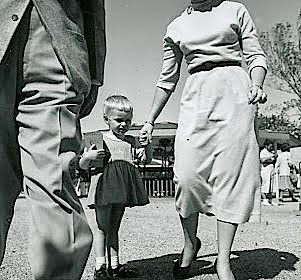
The first two photos above are from a fascinating New York Times interview with Alison Bechdel that takes place during a visit to her former home (now owned by others, but still keeping much of the original decoration intact). The writer, Ginia Bellefonte makes this perceptive remark about how the Victorian restoration is visual map of Bruce Bechdel's psyche:

"The offending accouterments are still in place: wallpaper imprinted with floral buds and a heavy chandelier that looks as if it were made of skulls. The combination seems a reminder of just how powerfully Victorian décor embraced the nascent and the sepulchral, life and the negation of it, much as the era’s mores were charged with the tension between vagrant urges and the enforced repression of them. If Bruce Bechdel aimed to keep the truth of his life hidden, one could argue that he also put it flamboyantly on display."

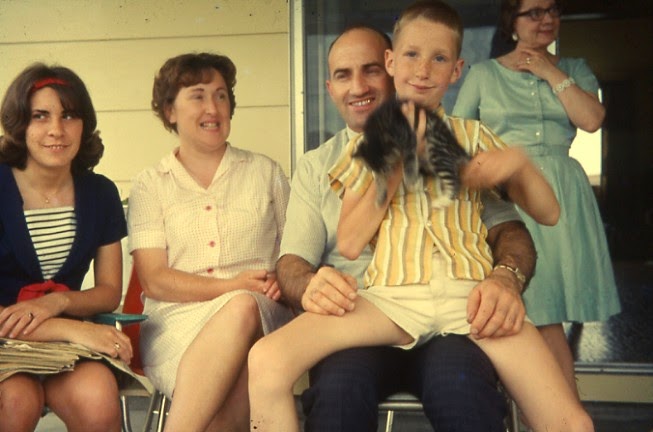
The rest of the article can be found here. The last photo above is a snapshot from when the Bechdel family was in residence. I'm sure you can pick out everything in the photo including the vase that somehow got too close to the edge of the table...

You can find a related NYT Q & A session with Alison Bechdel here.

Sunday, November 22, 2015

Screen/ing Memories


The last literary text we are examining this semester is Alison Bechdel's Fun Home, an ambitious memoir about her childhood and her relation to her father (and other family members). The last two bits of Freud we will read are two essays which may be helpful in approaching Bechdel: "Screen Memories," and "The Family Romance." The following is an introduction to Freud's thoughts on the memory, and especially childhood memory/memories of childhood.

The problem of memory is at the heart of Freud’s work. Before he developed his theories of dreams and their relation to the Unconscious, he argued for the central position of memory as a subject of analysis. We can see the importance memory would have in his later work in his early attempt to define the root of "hysteria:" "Hysterics suffer from reminiscences." In his essay, "Screen Memories," Freud saw a psychological function of general importance, that memory is an active process of the present, reorganizing and reinterpreting the past at the same time preserving shards of original experience. It is through memory that we produce the narrative that is our "selves," a fictional construct with its own truths.

One of the most provocative suggestions in Freud's early and brief essay, "Screen Memories," is the notion that memory itself is a kind of fictional narrative. In other words, memory is more about the present than it is about the past and it is always "image-inary" in nature: something we create rather than just "have." At the end of "Screen Memories," Freud remarks, "It is perhaps altogether questionable whether we have any conscious memories from childhood: perhaps we have only memories of childhood. These show us the first years of our lives not as they were, but as they appeared to us at later periods..."

In her book on children's fiction, The Case of Peter Pan, or The Impossibility of Children's Fiction, literary theorist Jacqueline Rose offers some comments on Freud's essay that may be of interest to our work on representation of memory and childhood.

Rose is interested in the way that Freud seems to come to his master concept of the Unconcious via his early essay on childhood memory. We've read much of our Freud out of chronological order, so it is useful to remember that "Screen Memories" predates Freud's work on dreams and the consequent elaboration of his theories of repression, displacement and sublimation: the transformation of meaning that takes place in the dream-work.

"We do not realise that Freud was first brought up against the unconscious when asking how we remember ourselves as a child. The unconscious is not an object, something to be laid hold of and retrieved. It is the term which Freud used to descibe the complex way in which our very idea of ourselves as children is produced... Setting himself to analyse one of his earliest recollections, he found that the event he remembered had never taken pace. The importance of the memory was not, however, any the less for that. For what it revealed was the unresolved conflicts affecting the way in which he was thinking about himself now. [One of] the most crucial aspects of psychoanalysis is the insistence that childhood is something in which we continue to be implicated and which is never simply left behind. Childhood persists... It persists as something which we endlessly rework in our attempt to build an image of our own history. When we think about childhood, it is above all our investment in doing so that counts...

For Freud, neither childhood nor meaning can be pinned down---they shift, and our own identity with them... [T]he often contradictory and inconsistent ways that childhood appears in analysis undermines any notion of a straightforward sequence and throws into crisis our relationship to meaning itself. Meaning is not simply there---it is built up, it can be determined by totally contradictory associations, and can emerge long after the event which apparently gives it form." (12-16)

Saturday, November 21, 2015

Introducing Fun Home

In 2006 Time Magazine picked Fun Home as the best book of the year. Not as the best comic book or graphic novel, or fiction or memoir, but best BOOK period. Here's a multimedia roundup of Fun Home information you may find of interest.

First, some stuff to read:

The Wikipedia entry on Alison Bechdel is pretty good. Here you will learn useful things and fun trivia such as Bechdel is a member of the Usage Panel of the American Heritage Dictionary and her baby brother John is now a keyboardist who's played with Ministry, Fear Factory, Prong and Killing Joke among other bands.

Alison Bechdel's website is a compendium of useful items: an archive of her comic strip, information about other past and future projects, links to reviews about Fun Home and so on. One thing you might want to take a look at is a piece she wrote for Slate about telling her mother she was writing about their family.

Here's a short YouTube video of Bechdel drawing the wallpaper endpapers of Fun Home:


And here she talks about her process of drawing many of the scenes in the book by acting out and photographing herself in many of the character's roles (adding more to the many uses of photography in Fun Home):


Here's an early (1981) strip which now reads as trial run for part of Fun Home. Coming Out Story covers some of the same incidents that are also represented in Fun Home.

And if you want to see how academics have treated Fun Home, here are links to three downloadable .pdf's of papers presented at a scholarly conference in France: Double Trajectories: Crossing Lines in Fun Home, by Karim Chabani, Images as Paratext in Alison Bechdel’s Fun Home, by Agnes Muller and Drag as Metaphor and the Quest for Meaning in Alison Bechdel’s Fun Home, a Family Tragicomic, by Helene Tison.

In 2009, Fun Home was adapted as a musical by Lisa Kron and Jeanine Tesori. It debuted Off-Broadway in 2013 and was a finalist for the 2014 Pulitzer Prize for Drama, winning the New York Drama Critics' Circle Award for Best Musical and the Obie Award for Musical Theater the same year.  A Broadway production began in 2015, which won five Tony Awards.

Tuesday, November 17, 2015

Thoughts on first papers


Although I'm going to try to hand the papers back this Wednesday, I hope I can put everyone's mind at rest by saying that this batch of papers was quite good: most everyone exhibited clear engagement with the ideas we've been working over in class. I wanted this first assignment to give you a kind of experimental space to "play" with the theory we've been discussing, to bring it into the space of reading fiction and perhaps discover new ways to think about narrative and its place in our lives.

I know some students felt flustered by the lack of conventional essay guidelines. Clearly, I didn't want students to simply reproduce the ideas they'd read or the discussion we've had. That can be a tall order when much of your education has focused precisely on those skills: mastery of a formula and its accurate reproduction are useful processes for some areas of academic study, if not all. And that kind of "learning" is pretty much where we all begin our earliest lessons: mimicking the sounds cooed to us by parents, following their instructions help us become a "big boy" or a "big girl."

But, necessary as this kind of mastery of social convention is for the infant, it is a far cry from learning to be able to critically reflect on those conventions, on our lives and on our adult selves. Learning how to consciously use ideas is the empowering conceptual break common to both pedagogy and psychoanalysis.

Freud once wrote that "The discovery of the unconscious and the introduction of it into consciousness is performed in the face of a continuous resistance on the part of the patient. The process of bringing this unconscious material to light is associated with pain, and because of this pain the patient again and again rejects it...[however] if you succeed in persuading him to accept, by virtue of a better understanding, something that up to now, in consequence of this automatic regulation by pain, he has rejected, you will then have accomplished something towards his education."

Though all of your papers had varying strengths, it was clear to me that there was still resistance (and most of it probably unconscious) to push beyond the usual English paper assignment. Many papers began by rehearsing information about Freud or about psychoanalysis or about Henry James that was completely unnecessary for this paper. I think we can take it as a given that Freud and Henry James are "famous writers" and other such generalities. Papers which began this way usually didn't stray too far from simple "book reports" (rehearsal of plot) or comparison/contrast essays.

Likewise, many students exhibited a great deal of anxiety about the assignment both before and after. I'm not so much interested in all of this in terms of "correcting problems;" I am interested, though, in the roots of such fear and how it can obstruct learning. The last time I taught this course, a student once linked "the Uncanny" with students' performance anxiety: grounding it both in the fear of not seeing (not understanding things correctly) and the fear of being seen (looking like an idiot in front of the teacher/class). I think that the repression trauma that produces the infant as functioning subject certainly has a clear analogy in our current educational structures.

But, back to the papers. Here are a few interesting and useful bits from the papers on "The Turn of the Screw:" I think there are some good ideas here for further work in future papers. I particularly want to turn your attention to the way these students touched on the role of the reader: that the novel was not just a story about the Uncanny, but an experience of it.

Andrew began his paper with a frank admission of his anxiety over the assignment: not being sure he understood the concepts under discussion, not being sure he understood the novel, not being sure how to draw both together, and so on. But, he also related how this frustration with "not knowing" let him to rethink "knowing" itself: "In class we discussed the calculated ambiguity of the novel, so I realized my duty to inject my own perceptions into the stories' blurred parameters....I no longer looked for answers, but created them with Freud as my guide." Andrew expressed how this freed him up to explore areas of the narrative he previously hadn't considered; finally deciding to read "The Turn of the Screw" as a kind of allegory about control (though the use of the term "allegory" is mine not Andrew's). The rest of his paper explored the Governess being "haunted" by her lack of control within the framework of being put in sole control. I think some of Andrew's ideas can be profitably extended to both H and Fun Home, both of which foreground the relations between children and parents.

Bar, too, focused on the relation between knowledge and "the Uncanny." His starting point was that of Freud's definition: the Uncanny doesn't disturb through novelty, but by familiarity, albeit the unfamiliar aspects of what is assumed to be "well known." But Bar pushes this even further: "The uncanny does not create disquiet simply because it introduces a new, unknown aspect to something which was perceived to be known. It is that which exposes everything to be necessarily unintelligible. The uncanny does not lie solely in the story, but rather is an effect of the reading itself. The experience of reading the story in itself reveals to the reader that they in fact don't have anyway of knowing anything." The rest of his paper follows up the "funhouse" effect of the multitude of doubling and doubles found throughout "The Turn of the Screw." Everything that seems "objective" is "subjective," everything the seems clear is revealed to be opaque, everything seems to fold into its opposite: The Good Governess and The Bad Jessel are obvious mirror images. Bar talks about an "Inception"-like chain reaction produced by the Uncanny: an unending opening up of ambiguity where once there was certainty, a chain of possible readings and interpretations which constantly undermine each other.  Bar seems to take the Uncanny to an almost nihilistic point---can we really know anything?

Tehreem focused most of her discussion on the Governess and her uncanny experience of the ghosts. She points out that this uncanny quality is an effect not of their "supernatural" status (spirits of the dead!) but instead of their narrative function as doubles.  These "ghosts" have returned because they are the repressed: they represent not only the individual repressed desires of the Governess (sexual in nature), but also the larger repressed behaviors of society itself (based in class divisions).

Quelsy started with a discussion of "The Sandman" and extended that story's recurring motif of eyes/sight into an examination of the dynamic of the seen/unseen in "The Turn of the Screw." He compared the ghosts' desire to be seen to that of the Governess. Both crave a recognition; in the case of the Governess, she want to be "seen" by the Master as fulfilling his desires, but his desires can only be fulfilled be her remaining "unseen" (not contacting him). He also points out how the frustrations of the characters in the text mirror the frustrations of the reader with the text---what is it that the reader "sees?"

Caroline began by thinking about the convention of the "ghost story:" a narrative which usually entertains by scaring us in sometimes unpredictable, sometimes predictable, but always "safe" ways.  She finds "The Turn of the Screw" parting ways with the traditional ghost story because its distressing effects are not found in the "unusual" elements of the story (the ghosts, which aren't particularly scary in a conventional way) but in the disquiet of the "everyday:" things taken for granted that are revealed to be less familiar, less understood, than initially supposed. And worse, the possible impossibility of ever being able to know with certainty: the children, innocent or corrupt? the Governess, careful or neglectful of the children? Caroline ended her paper with how this ambiguity rebounds on the reader: "scaring" us with this lack of certainty rather than showing us some "certain" evil.

These are only a few examples of the work everyone did in their papers. But they give a glance at the differing ways people approached the assignment and differing aspects of both the novel and the concept of the Uncanny that students focused on. One carry over from this assignment to the next paper might be to again think about the position of the reader: how a text might "force" us to read it in a certain fashion, and what the results of that are on the reader. And also, what Freud's texts teach us about reading: how do we "interpret" the stories we encounter---not just in this class but also in our lives in general. As I think most students concluded at some point in their papers, a final certainty seems to be off the table. But what about reading less as a way to find answers and more as a way to construct (new, useful) questions?

Monday, November 16, 2015

Excavating H

Elizabeth Shepard's novel, H, is a story told entirely through letters---correspondence by, or concerning, the case of Benjamin Sherman. The plot is necessarily fragmented: we have no comprehensive narrative exposition which ties the events of the plot together into an interpretive whole. The role of the reader, then, is much like the Freudian analyst who examines each dream, memory or association as a rich piece of evidence or telling relic, a part which suggests the missing or repressed whole. Freud often likened his work to that of an archeologist, one who examines surface detritus for what it suggests about structures buried beneath.

Freud used the metaphor of archeology quite early in his work, long before he fully developed the model of accessing latent content via its manifest traces in dream interpretation. In Studies of Hysteria, he likened analysis to "the technique of excavating a buried city." And in his essay "Delusions and Dream in Jensen's Gradiva," he again invoked the metaphor in this passage: "There is actually no better analogy for repression, which both makes something in the mind inaccessible and preserves it, than the burial that was the fate of Pompeii and from which the city could reappear through the work of the spade."

Literary theorist Pierre Macherey called such interpretive work, symptomatic reading. As in psychoanalysis what is not said is as important as what is said, and a symptomatic reading must focus on what the narrative omits or excludes as well as what it has included. Clearly, H demands an attentive reader who can read the silences in and between individual letters, who can hear what is stubbornly not being said, who can perceive the avoided and repressed as well as the obvious. For most of the characters in H, Benjamin is clearly the problem, for the reader he is part of a problematic: a larger story which includes the story of the Sherman family, the story of Mr. and Mrs. Sherman, the story of siblings Benjamin and Hannah, the story of conventional psychiatric treatment, the story of conventional notions of childhood and childhood development, and so forth, all of which must be excavated in order to make sense of Benjamin and Elliot.

Discuss your excavation of H: what were you able to reconstruct of the "missing" problematic? What parts remain indeterminate or unrecoverable? Does the narrative itself suggest or imply certain ways of filling in the blanks? Does it favor some interpretations over others? And most importantly, how does the narrative conceptualize the important categories of "sick" and "healthy"? The text's authority figures all take Benjamin to be "sick" (though with differing definitions of "illness") and they advocate for his "health" (again with very differing notions of "sanity"). How does the narrative resolve these contradictions (or does it)? Clearly Benjamin has changed by the end of the story, and clearly this change is predicated on the loss of a rich and creative, if quirky, imaginative structure. Much like the Freudian infant whose polymorphous capacity for pleasure must be narrowed down and contained within accepted behaviors, Benjamin must shed those parts of his psyche which "don't fit." Does the narrative suggest how we should interpret and judge his transformation?

Length: around 5 pages
Due: Monday, November 30

Tuesday, November 10, 2015

The "Fort / Da" Game

(Above, Freud and his daughter Sophie, whose son Ernst is the fort / da spieler.)

In Beyond the Pleasure Principle (1920), Sigmund Freud relates the story of a game his grandson invented at the age of one and a half, before he could speak many words. He used to throw small objects away from him, then say "o-o-o-o" with pleasure. He also took a wooden spool attached to a piece of string, and threw it over the edge of his cot, so that it disappeared. After saying "o-o-o-o," he would pull it back to himself and say, "da." He repeated this game over and over. Freud and the boy’s mother understood him to be saying "fort" and "da" (German for "gone" and "there").

Freud theorized that this game of disappearance and return allowed the boy to manage his anxiety about the absences of his mother, to whom he was very attached. By controlling the actual presence and absence of an object, he was able to manage the virtual presence of his mother. The fort / da game was the child’s invention of symbolism: the use of one object (wooden reel) to represent another (mother).

If you recall our earlier discussion of language, you'll remember that Jacques Lacan discusses the important moment in the development of subjectivity when the child grasps the idea of language (the field of culturally symbolic sounds and representations) and so enters what he terms, "the symbolic order." In Lacan's reworking of Freud, language---symbolic representation---is the all important medium through which our access to "the real" is structured.

Freud's grandson was using his creative play as a way to deal with a basic childhood anxiety through representation. He was asserting control over his environment, learning a method to dispel anxiety and frustration and coming to terms with a concept: absence and presence, the idea that mother can be "gone" yet still there, in memory and play.

Here is the relevant section from Beyond the Pleasure Principle:

"…At this point I propose to leave the dark and dismal subject of the traumatic neurosis and pass on to examine the method of working employed by the mental apparatus in one of its earliest normal activities. I mean in children's play.

The different theories of children's play have only recently been summarized and discussed from the psychoanalytic point of view by Pfeifer (1919), to whose paper I would refer my readers. These theories attempt to discover the motives which lead children to play, but they fail to bring into the foreground the economic motive, the consideration of the yield of pleasure involved. Without wishing to include the whole field covered by these phenomena, I have been able, through a chance opportunity which presented itself, to throw some light upon the first game played by a little boy of one and a half and invented by himself. It was more than a mere fleeting observation, for I lived under the same roof as the child and his parents for some weeks, and it was some time before I discovered the meaning of the puzzling activity which he constantly repeated.

The child was not at all precocious in his intellectual development. At the age of one and a half he could say only a few comprehensible words; he could also make use of a number of sounds which expressed a meaning intelligible to those around him. He was, however, on good terms with his parents and their one servant-girl, and tributes were paid to his being a 'good boy'. He did not disturb his parents at night, he conscientiously obeyed orders not to touch certain things or go into certain rooms, and above all he never cried when his mother left him for a few hours. At the same time, he was greatly attached to his mother, who had not only fed him herself but had also looked after him without any outside help. This good little boy, however, had an occasional disturbing habit of taking any small objects he could get hold of and throwing them away from him into a corner, under the bed, and so on, so that hunting for his toys and picking them up was often quite a business. As he did this he gave vent to a loud, long-drawn-out 'o-o-o-o', accompanied by an expression of interest and satisfaction. His mother and the writer of the present account were agreed in thinking that this was not a mere interjection but represented the German word 'fort' ['gone']. I eventually realized that it was a game and that the only use he made of any of his toys was to play 'gone' with them. One day I made an observation which confirmed my view. The child had a wooden reel with a piece of string tied round it. It never occurred to him to pull it along the floor behind him, for instance, and play at its being a carriage. What he did was to hold the reel by the string and very skillfully throw it over the edge of his curtained cot, so that it disappeared into it, at the same time uttering his expressive 'o-o-o-o'. He then pulled the reel out of the cot again by the string and hailed its reappearance with a joyful 'da' ['there']. This, then, was the complete game of disappearance and return. As a rule one only witnessed its first act, which was repeated untiringly as a game in itself, though there is no doubt that the greater pleasure was attached to the second act. (1)

The interpretation of the game then became obvious. It was related to the child's great cultural achievement: the instinctual renunciation (that is, the renunciation of instinctual satisfaction) which he had made in allowing his mother to go away without protesting He compensated himself for this, as it were, by himself staging the disappearance and return of the objects within his reach. It is of course a matter of indifference from the point of view of judging the effective nature of the game whether the child invented it himself or took it over on some outside suggestion. Our interest is directed to another point. The child cannot possibly have felt his mother's departure as something agreeable or even indifferent. How then does his repetition of this distressing experience as a game fit in with the pleasure principle? It may perhaps be said in reply that her departure had to be enacted as a necessary preliminary to her joyful return, and that it was in the latter that lay the true purpose of the game. But against this must be counted the observed fact that the first act, that of departure, was staged as a game in itself and far more frequently than the episode in its entirety, with its pleasurable ending.

No certain decision can be reached from the analysis of a single case like this. On an unprejudiced view one gets an impression that the child turned his experience into a game from another motive. At the outset he was in a passive situation, he was overpowered by the experience; but, by repeating it, unpleasurable though it was, as a game, he took on an active part. These efforts might be put down to an instinct for mastery that was acting independently of whether the memory was in itself pleasurable or not. But still another interpretation may be attempted. Throwing away the object so that it was 'gone' might satisfy an impulse of the child's, which was suppressed in his actual life, to revenge himself on his mother for going away from him. In that case it would have a defiant meaning: 'All right, then, go away! I don't need you. I'm sending you away myself.' A year later, the same boy whom I had observed at his first game used to take a toy, if he was angry with it, and throw it on the floor, exclaiming: 'Go to the fwont!' He had heard at that time that his absent father was 'at the front', and was far from regretting his absence; on the contrary he made it quite clear that he had no desire to be disturbed in his sole possession of his mother. We know of other children who liked to express similar hostile impulses by throwing away objects instead of persons. We are therefore left in doubt as to whether the impulse to work over in the mind some overpowering experience so as to make oneself master of it can find expression as a primary event, and independently of the pleasure principle. For, in the case we have been discussing, the child may, after all, only have been able to repeat his unpleasant experience in play because the repetition carried along with it a yield of pleasure of another sort but none the less a direct one.

Nor shall we be helped in our hesitation between these two views by further considering children's play. It is clear that in their play children repeat everything that has made a great impression on them in real life, and that in doing so they abreact the strength of the impression and, as one might put it, make themselves master of the situation. But on the other hand it is obvious that all their play is influenced by a wish that dominates them the whole time, the wish to be grown-up and to be able to do what grown-up people do. It can also be observed that the unpleasurable nature of an experience does not always unsuit it for play. If the doctor looks down a child's throat or carries out some small operation on him, we may be quite sure that these frightening experiences will be the subject of the next game; but we must not in that connection overlook the fact that there is a yield of pleasure from another source. As the child passes over from the passivity of the experience to the activity of the game, he hands on the disagreeable experience to one of his playmates and in this way revenges himself on a substitute.

Nevertheless, it emerges from this discussion that there is no need to assume the existence of a special imitative instinct in order to provide a motive for play. Finally, a reminder may be added that the artistic play and artistic imitation carried out by adults, which, unlike children's, are aimed at an audience, do not spare the spectators (for instance, in tragedy) the most painful experiences and can yet be felt by them as highly enjoyable. This is convincing proof that, even under the dominance of the pleasure principle, there are ways and means enough of making what is in itself unpleasurable into a subject to be recollected and worked over in the mind. The consideration of these cases and situations, which have a yield of pleasure as their final outcome, should be undertaken by some system of aesthetics with an economic approach to its subject-matter. They are of no use for our purposes, since they presuppose the existence and dominance of the pleasure principle; they give no evidence of the operation of tendencies beyond the pleasure principle, that is, of tendencies more primitive than it and independent of it.

(1) A further observation subsequently confirmed this interpretation fully. One day the child's mother had been away for several hours and on her return was met with the words 'Baby o-o~o!' which was at first incomprehensible. It soon turned out, however, that during this long period of solitude the child had found a method of making himself disappear. He had discovered his reflection in a full-length mirror which did not quite reach to the ground, so that by crouching down he could make his mirror-image 'gone'."

(Sigmund Freud, "Beyond the Pleasure Principle," The Freud Reader, W. W. Norton & Co., New York, 1989, pages 599-601)

Thanatos: Beyond the Pleasure Principle

In Beyond the Pleasure Principle, Freud modified his earlier model of psychic economy in which “the pleasure principle” (and its repression/sublimation) is the central force propelling human action, behavior and development. In this essay Freud sketches out a new theory of drives by adding “the death drive” (called “Thanatos,” in complement to “Eros” by Freud’s students). Beyond the Pleasure Principle produces a striking portrait of the human psyche as struggling between two opposing forces: Eros, the progressive drive toward sexual and pan-sexual pleasure, creativity and harmony; Thanatos, the regressive pull of repetition, compulsion, aggression and self-destruction.

Beyond the Pleasure Principle was born out of Freud’s work with victims of trauma--specifically the traumatized soldiers returning from World War I. In fact, one of the cultural effects of the Great War was a growing popular recognition of the existence of psychological damage itself: that one could be as debilitated by mental trauma as physical injury. Freud observed that his patients often tended to repeat or re-enact these traumatic experiences, in symbolic or displaced forms, a seemingly paradoxical phenomenon that he termed repetition compulsion. Such compulsive repetition of the unpleasurable appeared to contradict the pleasure principle. In his further reflection on the phenomena, Freud noticed this repetition of unpleasant events could be found even in other circumstances like the play of children, as elaborated in his famous description of the fort / da game of his grandson. It is clear from this example that, at least on one level, such repetition compulsion is born from and can produce a positive and healthy attempt to deal with trauma by regaining control over a situation where previously one had none.

While Freud believed that in many cases we repeat traumatic events in order to master them after the fact, this is not the only motive or result of a drive away from pleasure. Freud began to distinguish a deeper masochism, a process that involves the drives turning against the self. Freud postulated the existence of a fundamental death drive that would counterbalance the tendency of beings to do only what they find pleasurable. According to this idea, organisms are driven to return to a pre-organic, inanimate state: to seek to withdraw from the anxiety of life (movement) in stillness and death.

Thursday, October 29, 2015

Works cited

Here is the protocol to follow with papers for this class. A good practice is to always ask the professor to provide an example of how they would like citations referenced---although citing practices are becoming more streamlined and more consistent across the disciplines, there are still some differences in style guides and citation procedures (if you are publishing an article, the journal or editor will always provide you with a style sheet to follow).

Embedded citations (used in MLA style) are nice and simple. For an embedded citation, you simply put a parenthetical reference to the work from where you got your information. This information may have been paraphrased or directly quoted; either way, the information is not your original work and must be attributed to its author.

The idea of parenthetical references is to keep the flow of the paper as smooth as possible and make it easy for the reader to find the reference in your Works Cited page at the end of your essay. Your Works Cited page will list all your references in alphabetical order by author's last name (or title in the case of work with no author given).

Thus, if you have mentioned the author in your writing, you simply cite the page number, if you have not, then you cite both author's last name and page number. For example:

In the opening of The Turn of the Screw, Douglas remarks, "The story won't tell...not in any literal or vulgar way." (James, 5)

At the beginning of James's novel, Douglas remarks, "The story won't tell...not in any literal or vulgar way." (5)

If you don't have an author to cite, use a shortened form of the work's title.

In organizing your Works Cited page, follow these examples (MLA style):

Book:

Lastname, Firstname. Title. City: Publisher, Date.

Essay in a Book of Essays:

Lastname, Firstname. "Title of Essay." Title of Book. Editor's Firstname Lastname. City: Publisher, Date.

Periodical:

Lastname, Firstname. "Title." Periodical day month year.

Journal:

Lastname, Firstname. "Title." Journal volume (year).


Web page (blogs and other online sources): Web page format and content vary widely. Use the following guidelines (blogger software will not allow me to type the term "URL" enclosed in <> marks. But that is the format you should follow):


General:

Lastname, Firstname. "Article Title." Site Name. Organization name if pertinent. Article date. Date of access. End with URL enclosed in <> marks


With no author and no page date:


 "Article Title." Site Name. Organization name if pertinent. Date of access. End with URL enclosed in <> marks

Site with no site name:

 
Lastname, Firstname. "Article Title." Home Page. Article date. Date of Access. End with URL enclosed in <> marks 
 
Note: If there are no page numbers, as is usual with Web documents, do not make up one or use the number one (as in "Jones 1") to cover the whole document. Use a number only when there is a number.

Class materials with no publication information/page numbers/other data:

Craft a citation using the information you have; you will at least have author's name and the title of the story or essay.

I think this covers all the situations you will encounter in writing this paper.

For any other questions you may have, feel free to ask.

Thursday, October 15, 2015

First Essay: The Turn of the Screw and the Uncanny


In our last class, some students asked that I post the first essay assignment now, although we haven't yet begun to explore The Turn of the Screw to any great degree. I think that's a good idea, too, because we can use the questions posed in the assignment to guide our discussion in the coming weeks.

Discuss Henry James' novella, The Turn of the Screw as an instance of the Freudian Uncanny. Can you see similar or parallel elements in this narrative to those Freud finds in "The Sandman" and his further definitions of the category, "das Unheimlich," in his essay?

Think about how Freud investigates the Uncanny. He describes many features of this estranging effect; his discussion of the concept centers on examples of doubling, repetition, ambiguity, above all the unfamiliar face of the familiar. His first move in his essay is to demonstrate the unheimlich hidden in the heimlich: the uncanny in the "home-ly." In this way he connects the Uncanny with the return of the repressed:

"It may be that the Uncanny (the 'unhomely') is something familiar ('homely', 'homey') that has been repressed and then reappears, and that everything uncanny satisfies this condition...I believe that it...can be traced back every time to something that was once familar and then repressed..."

Freud also associates the Uncanny with Oedipal anxiety; he pays particular attention to "The Sandman" as a story about Fathers and Children.

What is the return of the familiar, the homely in The Turn of the Screw? The unfamiliar familiar? The hidden familiar? Family and familiar share the same root and indeed a family, a displaced and disrupted family is at the heart of The Turn of the Screw. We have two children and three sets of parents----the children's biological parents, the surrogate parental couple of Jessel and Quint, and the Master and the Governess. Four of the six are dead; of the two living, one has abdicated his (legal, biological) position entirely and given the other an absolute authority. The Governess is The Father in this case.

Also consider the way this "coupling" of characters sets up patterns of repetition and doubling: Quint/the Master, Jessel/the Governess, the Governess/Quint. Although the Governess's story is premised on a clear distinction between Good and Evil, the various similarities in situation and activity between the Governess and the Ghosts blur those lines and render motive and meaning ambiguous.

Finally, this is a story established at the beginning as one which "won't tell, not in any literal or vulgar way." In other words, this is a story of suggestion rather than revelation, of "evidence" that can be construed in multiple directions, of questions that can be entertained but never assigned a final answer. Literary critic J. Hillis Miller commented on The Turn of the Screw, "The words on the page work infallibly as speech acts forcing the reader...against his or her will, to "read into" the words meanings that are not there. The reader will fill the blanks out of his or her imagination and so be responsible for whatever evil thoughts he or she may have."

This assignment should be very simple on one level and very challenging on another. Think of this first paper as a trial run: a place to “try out” some of the ideas we’ve been talking about in class, a place to try out new ideas and observational skills. Think about how Freud's essay illuminates James's novella. Do not perform a literal and vulgar "Freudian" reading: i.e., do not attempt to "psychoanalyze" the Governess and "solve" her "case."

And don’t forget to title your essay. A title is one of the elements which distinguishes a piece of formal writing from an informal series of notes. Your title should reflect something pertinent to your discussion. "Paper One," "Essay," "Freud Paper," and the like are not adequate essay titles. Neither is the title of the novel you are writing about.

Length: 4 1/2 to 5 typewritten double-spaced pages.
All papers must be stapled or they will not be accepted.
Due: Monday, November 2

Monday, October 12, 2015

The Victorian Cult of the Child: Innocence and Experience, Ignorance and Knowledge


Above are two images that illustrate aspects of Victorian beliefs about children and childhood. The first, "The Child Enthroned," pretty much says it all in its title. This 1894 painting by Thomas Cooper Gotch was wildly popular as an expression of "the child" as a quasi-divine icon. The second is a photograph of Alice Liddell by the Rev. Charles Dodgson, better known as Lewis Carroll. To our modern eyes, this image looks seductive and likely a bit sexualized. Yet both are rather mainstream images which would have been read as exemplars of childhood innocence by Victorian eyes.

According to the Victorian ideal, the child was viewed not as a miniature adult, as children had been perceived in an earlier era, but as innocents who were to enjoy a life of carefree happiness until old enough to assume the responsibilities of (a gendered) adult life. But for Victorians, the moral category of "innocence" was defined by ignorance. Well-bred young ladies and adult women were also expected to be "innocent" and childlike (in fact, both women and children occupied the same legal status in Victorian England as non-competent dependents) and this meant being in large part ignorant of the "brutal" sphere of public life (work, commerce, people from outside one's own genteel class). For children, innocence and moral purity was defined by their ignorance of adult life and adult knowledge. Above all childhood innocence was premised on a lack of sexuality: the child was seen not so much as a pre-sexual creature, but by definition, an asexual one. This is why Lewis Carroll's child photography---including nude studies that seem "obviously pedophiliac" to contemporary eyes---did not ring any alarm bells among Victorian parents who not only permitted, but were often present, during sittings.

Of course it goes without saying that all this angelic innocence and purity applies only to well-bred children, the offspring of ladies and gentleman. The spawn of the working classes were quite another thing indeed. (Here you can read about their pre-child-labor law innocence--don't miss the affidavits from child miners who started working at around age five). These images


contrast sharply with these


this portrait


with this one


Looking at Miles and Flora again, then, may reveal why they would be such disconcerting figures to their original audience: while they are no more intelligent than the average children of their class, they are knowing. Tainted by access to (adult) knowledge, they are no longer ignorant and therefore no longer innocent.

Here is a review from The American Monthly Review of Reviews, December 1898, which expresses unease with having children as fictive figures of "evil:"

"The malignant spirit is worsted, but the price of victory is death. There is something really great in the story and assuredly the skill is superb. But surely we are not merely sentimentalists in our protest again children being made pawns in this horrible contest."

The Outlook (October 29, 1898) finds: "The story itself is distinctly repulsive."

And a reviewer in the New York weekly, The Independent, January 5, 1899, is more adamant in his disgust:

"The Turn of the Screw is the most hopelessly evil story that we have ever read in any literature, ancient or modern. How Mr. James could, or how any man or woman could, choose to make such a study of infernal human debauchery, for it is nothing else, is unaccountable...The study, while it exhibits Mr. James's genius in a powerful light, affects the reader with a disgust that is not to be expressed. The feeling after perusal of this horrible story is that one has been assisting in an outrage upon the holiest and sweetest fountain of human innocence, and helping to debauch---at least by helplessly standing by---the pure and trusting nature of children. Human imagination can go no further into infamy, literary art could not be used with more refined subtlety of spiritual defilement."

While this probably reads to us as a distinctly over-the-top reaction to The Turn of the Screw, we should also remember that a similarly scandalized reaction first greeted Freud's initial theories of children's development because they were premised on both the existence of childhood desire and sexuality and its naturalness.