Monday, October 12, 2015

The Victorian Governess

The heart of The Turn of the Screw is a manuscript written by a governess about a singular experience in her employment. In order to appreciate the position from which she is writing, indeed, the position from which she is making sense of the experiences themselves, a quick look at the historical position of the Victorian governess is absolutely essential.

Because she was neither family member nor working class servant, the governess held a peculiar and ill-defined role in Victorian society, a society which found middle-class female employment problematic. The only time a woman of genteel birth was justified in seeking employment was if she found herself in financial distress and had no male relatives to give her support. The governess was usually a lady forced to support herself because of her father’s death or financial ruin. While it was paid work, it was “respectable” labour. In the gender-appropriate domestic sphere and among the respectable classes, she was kept from contact with the vulgar and “common” world of working class employment. But because she was nevertheless employed, her social status was lessened. Definitely not a servant nor a menial, she was nevertheless not quite a class equal of her employers. In fact, aristocratic and middle-class Victorians were often not sure how to treat the governess: while she was roughly from the same social class, her lack of financial stability made her their obvious inferior.

The governess occupied a grey area in the class hierarchy of the Victorian household: she was “above” the servants, but “below” the family. And in no area was her class dilemma more clear than in the attenuated marriage prospects of the governess. She would likely remain a spinster since she must not consort with men from inferior or superior classes.

Monday, October 5, 2015

The story won't tell: beginning "The Turn of the Screw"


In the framing prologue there are several statements which seem to prefigure what kind of story we will read. The tale is categorized as a "ghost story," and yet distanced from that facile label: "It's beyond everything." In describing the governess's feelings for her employer, Douglas remarks that, "I saw it, and she saw I saw it; but neither of us spoke of it." This statement could sum up a great deal of the "action" of the story: a series of "knowing" looks where everything is, and isn't, said. The narrator suggests that any mystery will be cleared up once Douglas reads the manuscript aloud and that "The story will tell." But Douglas is quick to reply, "The story won't tell...not in any literal vulgar way.

We begin, then, with a story which "won't tell," won't reveal. A story about a young woman hired under condition that she "but never, never...appeal or complain, nor write about anything."

This is a narrative of gaps and silences. Of letters whose contents are momentous, but of which we never exactly learn. A story of monstrous, shameful actions which are constantly hinted at, but never revealed.

It is also a story about a story---the prologue establishes that we are "hearing" a story through three sets of narrators: the governess (who has written her story down), Douglas (who reads the governess's manuscript aloud to the house guests) and the narrator who is transmitting to us "an exact transcript of my own made later." And this haunting story about the dead is "haunted" by death before it's even begun---not only has the governess died years before Douglas tells her story, but Douglas himself has died prior to the narrator's re-telling of the story read out to the "hushed little circle" of expectant listeners.

It is a story of returning presences--ghosts--and characters who replace/displace each other. The governess is initially hired as replacement, as a kind of double replacement for both the governess and the absent Master. Moreover, she is constantly stepping into the position of---replacing---both Miss Jessel and Quint (at the window, at her desk, sitting at the bottom of the stairs, standing on the shore of the pond, etc.)

It is also a story of people slipping out of their "proper places." Part of Quint's "evil" is that he overstepped or didn't know his place (he wore his master's clothes, he presumed relations with his betters). And part of Miss Jessel's "evil" is that she, too, "fell" from of her place through her alliance with a social inferior. And yet the governess, clearly marked as "not evil" in the (her) story, is also out of place, invested by the Master with a proxy authority well beyond a governess's traditional duties.

And finally, it is a story about...well, what is it a story about?

Turns of the screw...


As I spoke about in class, Henry James' The Turn of the Screw, one of the most famous ghost stories is also a very ambiguous ghost story.  And his novella is premised on many kinds of ambiguity: not only on the level of  content (are the ghosts "really" there? what exactly is so terrifying about them?) but also form. James' story is presented as a manuscript written by a woman long dead, read years later. James' use of this narrative frame creates a distance between the events and our understanding of them. It’s so ambiguous that there are questions about the questions.

As you might expect it has become a very popular text for literary scholars and critics to analyze. It's also been a very popular inspiration for other artists: there are countless film and theater treatments of the story.

After we discuss The Turn of the Screw, we'll be reading one of the more ambitious and fascinating responses to it, Joyce Carol Oates's short story, "Accursed Inhabitants of the House of Bly," a work which attempts to turn TOTS on its head, so to speak.

But the work has inspired many treatments, versions and responses. Here's a far from complete list of other works which derive from The Turn on the Screw, many of which are more or less "faithful" adaptations for stage or sceen:

Benjamin Britten wrote an opera based on "The Turn of the Screw" in 1954.

A 1959 live television version starring Ingrid Bergman.

The Innocents (1961) with Deborah Kerr as the Governess and Michael Redgrave as The Uncle. Truman Capote worked on the script.

There's a television version with Lynn Redgrave as the Governess in 1974.

Shelley Duvall directed a version in 1989 for her television series, "Nightmare Classics" with Amy Irving as the Governess and Balthazar Getty as Miles.

A 1994 British version with Patsy Kensit and Julian Sands updates the story to the 1960s.

A 1995 television version called The Haunting of Helen Walker casts Valerie Bertinelli as the Governess.

Another television adaptation, in 1999, with Colin Firth as The Master.

A 1999 film adaptation Presence of Mind with Sadie Frost as the Governess, Harvey Keitel as the Master (!), Jude Law as The Secretary (!!?) and Lauren Bacall as Mrs. Grose (!!!!!!!)

The 2006 horror/thriller In a Dark Place is another TOTS adaptation, giving the story a contemporary setting.

Allegedly, the 2001 Nicole Kidman film, The Others is a TOTS version...but not very TOTS-y.

And probably the strangest film treatment I've come across is a 1971 prequel (!) to TOTS, The Nightcomers with Marlon Brando as a small-animal-torturing, BDSM Peter Quint. I'll have to try to track this one down soon.

The Return of the Sandman


A student once remarked that Hoffman's tale, "The Sandman," read like "a fairy tale for adults." I think this phrase is a good way to capture the fantastical and prosaic elements of the plot: on the one hand it's a story of tragic love affair, where the hero grows progressively out of touch with reality and descends into madness. On the other, it's a story filled with fantastical and implausible situations that are nevertheless real (that Nathaniel thinks Coppola is Coppelius is not just delusion, he actually is the same man, the clockwork woman Olympia does exist, Nathaniel does encounter the same violent struggle between father figures twice, etc.) And at the crucial points where the fantastical and the real overlap, the story lapses into a narrative indeterminacy, making it impossible to finally resolve the story as either a realistic portrayal of madness or a purely symbolic allegory.

And that's the element of the story I want to highlight here: that the uncanny elements of the story are not just in the plot but also in the narrative structure. The story is constructed in such a way that the reader is implicated in its uncanny effects.

As I remarked in class the story begins by drawing attention to its own formal features: it begins one way (an exchange of letters), but breaks off and begins again (the narrator interrupts and addresses the reader directly). And each of these beginnings is kind of a false one---both begin by telling their audience (Nathaniel tells Lothaire, the narrator tells the reader) that the story really started elsewhere, in other events beyond those that take place in the time sequence covered in the plot.

The motif of doubling, a striking feature of this story, further blurs the interpretive lines. Not only do some characters have dual natures or multiple identities---Nathaniel's Good Father is also an Occult Dabbler, Spanlanzi is both Respectable Professor and Occult Dabbler (and thus, resembles Nathaniel's Good Father), the Sandman is both Real and Fairytale, the Sandman-as-Fairytale has both benign and horrific versions---but nearly all the characters can be grouped in pairs of opposites which disclose a hidden bond or similarity. While Clara/Olympia are opposites as "real" and "artificial," they are "the same" as objects of Nathaniel's desire and are designated by the same term: automaton. So too, are Nathaniel and Olympia both opposite (real/fake) and the same: both are children of dual-natured fathers and victims of Coppelius's violence. Other pairings can be discussed in the same fashion; it is clear that in this narrative everything contains its opposite just as Freud discovered heimlich in the etymology of its other---unheimlich.

That the story is told in the third person, but nevertheless from Nathaniel's point of view, accounts for other problems of easy resolvability. Events are presented to the reader in a kind of simultaneously "objective" and "subjective" fashion. The most striking example, at least to me, is the first moment the reader tumbles into interpretive free fall: the story's Primal Scene. The revelation that greets Nathaniel---that the Sandman is real and moreover, not an unknown monster, but a familiar figure---is nothing compared to the reader's horror and shock when Coppelius roughly screws off Nathaniel's hands and feet and puts them back on again. Suddenly we don't know where we are; the incident breaks upon us without any textual warning as if we were reading an entirely different kind of story, or maybe had been all along. As Freud points out in his essay, "...Hoffmann already leaves us in doubt whether what we are witnessing is the first delirium of the panic-stricken boy, or a succession of events which are to be regarded in the story as being real." Thus, while we can try to resolve our confusion with a naturalistic explanation (i.e., this is something Nathaniel dreamed after he fainted in terror), such an explanation does not cancel out the anxious affect produced by the sequence. From this point on the reader is not just reading about the uncanny, but is experiencing it.

The Sandman, a narrative of returns


Here's a slightly expanded version of the plot line I drew on the board in Monday's class in order to help us visualize how the narrative structure of "The Sandman" is predicated on return and repetition. This is partly how Freud builds his reading of the story as an enactment of the Return of the Repressed (as always, more on that concept later). But he is also interested in the way the various returns hinge on parent/child relationships. This might be a good avenue into our next work, Henry James' The Turn of the Screw which is haunted by various combinations of families, none of them strictly "natural." And issues of sight, what exactly it is which we see with our mental and physical faculties, will also return.

(The diagram at the top of the post will enlarge if you click on it so you can read it better.)

Wednesday, September 30, 2015

The Sandmen


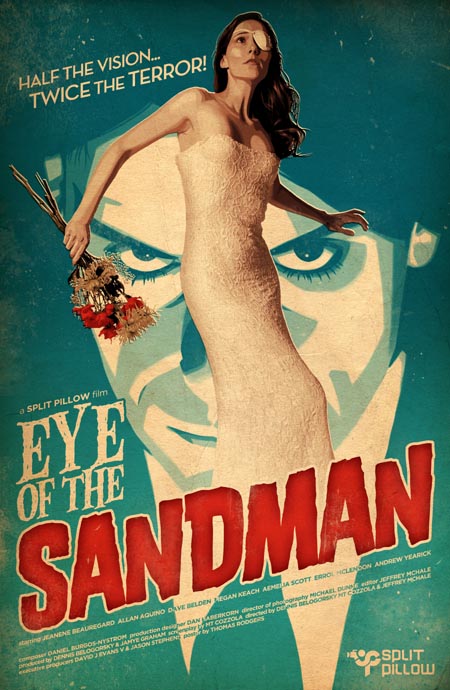
As mentioned in class, Hoffman's story, "The Sandman," has been adapted and used by many other writers and artists. The most well known uses are Offenbach's opera Tales of Hoffman and the ballet Coppelia. More recently, its been the inspiration for the stop-action puppetry work (The Sandman) of British animator Paul Berry (who later went on to work with Tim Burton on The Nightmare Before Christmas) and others like Split Pillow's production of Eye of the Sandman and the above video, "The Sandman," a work in progress by Rich Ragsdale (channeling both Fritz Lang and Gene Simmons, it seems). It also inspired a recent "musical play"/concept album, The Voice of Midnight, by the Residents, the San Francisco-based experimental musical group who have long performed anonymously in the guise of giant eyeballs...

Each one of these adaptations borrows different elements from the story: some focus on the Olympia part of the plot, some emphasize the eye-stealing menace of the monstrous Sandman.

Monday, September 21, 2015

Carnival of the Uncanny


Before we begin our discussion of Freud's essay and the short story embedded in it, E. T. A. Hoffmann's "The Sandman," I wanted to post a jumble of links and thoughts about this subject so we could have some fun, albeit some uneasy, disquieting and dissonant pleasure.

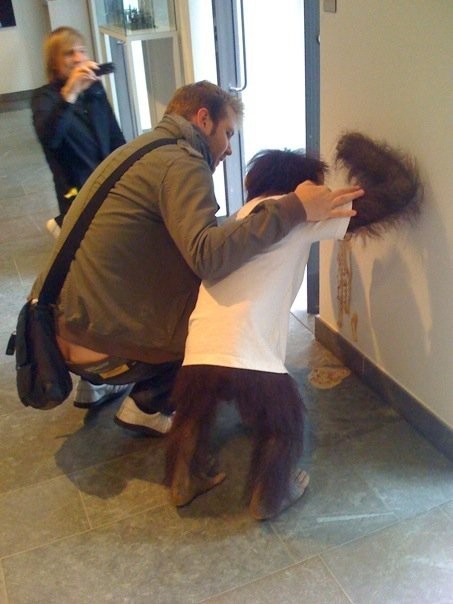
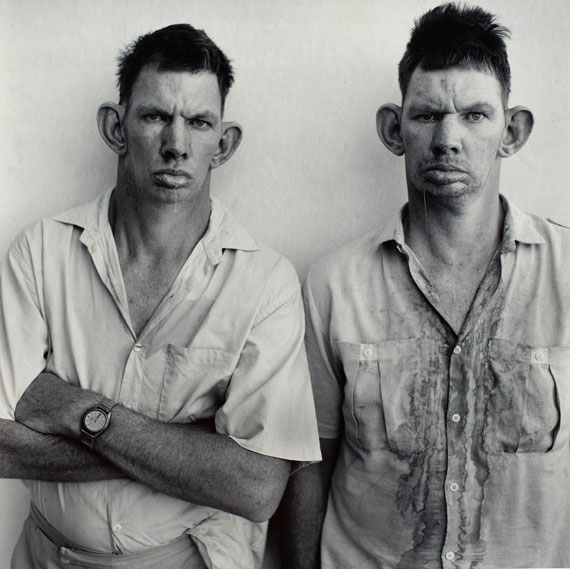
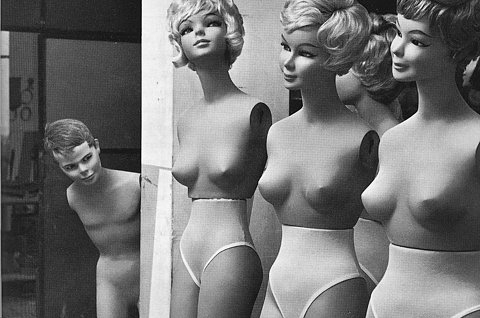
As you know already from the Glossary, the Uncanny refers to "an instance where something can be familiar, yet foreign at the same time, resulting in a feeling of the uncomfortably strange. Because the uncanny is familiar, yet strange, it often creates cognitive dissonance within the experiencing subject due to the paradoxical nature of being attracted to, yet repulsed by an object at the same time. Freud’s discussion of the concept centers on examples of doubling, repetition, seemingly meaningful patterns within coincidence, the experience of deja-vu, and the sometimes ambiguous boundary between life and death, especially in relation to artificial animation." With the Uncanny we enter the realm of dopplegangers, ghosts, indeterminacy, automata, ambiguity, robots, hauntings, synchronicity and pareidolia. Meaning gone strange, everything just slightly, disturbingly, askew.

Sunday, September 20, 2015

Introducing The Unconscious


I want to take some time to introduce Freud's concept of the Unconscious. It's important to spend effort on it because the Unconscious is the centerpiece of Freud's work, it's his greatest and most well known "discovery," and for that reason the one most likely to be encountered in simplified and watered-down versions. But if one is going to really find something useful in Freud, something that helps us see anew, then the estranging and challenging aspects of his theory need to emphasized and appreciated.

And instead of beginning my own summary here, I want to start in an indirect manner and through someone else's words (two moves that I hope by now register with you as "classic" Freudian gestures). I want to quote at length from Hugh Haughton's Introduction to our edition of The Uncanny. Haughton's remarks double back to our previous work on dreams, and my previous post on the space shared by psychoanalysis and literature and in the process suggests the place of the Unconscious in this convergence.

"By presenting the dream as riddle, Freud presents himself as solving 'the essential riddles of dreaming.' By the same token, he given a new definition of consciousness in embattled relationship to the larger, more primary and largely unknown phenomenon he called 'the Unconscious.' In fact, dreams are works of art, born of a compromise between the conscious and unconscious. They can only be understood by sustained historical investigation into the imaginative life and memory of the dreamer...

Freud repeatedly represents himself, like Oedipus, as a solver of riddles, a writer faced with an apparently insoluble problem of meaning. The great founding texts of psychoanalysis...tackle human phenomena hitherto resistant to meaningful interpretation---hysterical symptoms, dreams, everyday slips of the tongue, jokes, and so-called sexual aberrations. He interprets all of them as riddling forms of meaning that can be decoded and deciphered. This involves showing that they are analogous to each other. Rather than seeing them as aberrant phenomena, he sees them as products of fundamental, central and normal psychic processes, processes that are 'unconscious.' Freud's theory of aberration seeks to demonstrate that enigmatic areas of language and behavior hitherto classified as being below, above, or beyond significance, are ultimately intelligible. They are subject to interpretation. In doing so, however, he affirms the fundamental ways in which the human mind in general---and not only the 'pathological' or 'abnormal' mind---is unintelligible or unknowable to itself. If psychoanalysis was invented as a hermeneutic as much as a therapeutic practice, it is because it is founded on a double commitment to interpretation and resistance to interpretation. In his bid to make apparently anomalous human behavior intelligible, Freud was led to construct a theory which places unintelligibility at the heart of mental processes. In fact, in an astonishing transformation of the Cartesian project, it made self-unintelligibility the paradoxical cornerstone of psychic identity. ...His master work, The Interpretation of Dreams, turned everyone's dreams into esoteric texts, the unacknowledged poetic masterpieces of everyday life. As Lionel Trilling said in a pioneering lecture, 'of all mental systems, the Freudian psychology is the one which makes poetry indigenous to the very condition of the mind.'" (ix-x)

Haughton's remarks return us to the first day of class where I remarked that Freud reads the human psyche like a poem, with a "literary" attention to the relation between form and content and extended examination of rhetorical tropes like metaphor and metonymy which layer and transform meaning. He also draws attention to the creative aspects of the Unconscious---it produces, in effect, works of art---as well as its character as an ongoing process of subjectivity---he speaks of an "embattled" relation between the conscious and unconscious. Finally, he points out how radically different Freud's "split subject" is to the post-Renaissance notion of the individual which still informs much of way most people think of "the self."

For an example of how difficult it is to break with the notion of a "whole" self, consider the the classic "iceberg" model of the unconscious:

While alluding to Freud's topographic metaphor, this visualization unfortunately suggests that these psychic layers are just parts of the same whole. The unconscious may be submerged but it is still essentially connected to and part of the same overall structure. Now contrast that image with this:


In his biography of Freud, Peter Gay references the above drawing by Austrian Expressionist Alfred Kubin. Titled Selbstbetrachtung (Self-Observation), Gay finds it an apt illustration of the violently disorienting idea of the self which Freud created in The Interpretation of Dreams: a subject not just split, but seemingly severed from illusions (dreams) of wholeness and unity.

There are three aspects of Freud's model of the Unconscious that I think are the most fundamental to think about at this point:

  • What is the Unconscious and what is its function? This is basically a question of definition, but a tricky one because its hard to find a perfect metaphor or analogy for all the various characteristics Freud attributes to the Unconscious. Conventionally, it's usually described as a "place" a kind of "dumping ground" of traumatic memories or experiences, or a space "underneath" the conscious mind (a "sub" conscious). This, however, makes the Unconscious appear to be static, when in fact it is active. What makes it hard to produce a simple model is that the Unconscious is both "place" and "process." It is "where" traces of our past reside, but it is also the process through which our past desires and experiences come to shape our everyday lives (through processes of repression, sublimation and return). Its relation to the conscious mind is also paradoxical: although the two are intimately connected, they have no direct access to each other.

  • How does the Unconscious come to be? We have briefly begun talking about Freud's theories of how a child acquires a "self," how it learns to be a social subject. One feature that distinguishes human beings from other animals is that we are born almost entirely helpless and dependent. We have very few "instincts;" in a sense we have to learn not just how to survive but how to be human. Freud is interested in the way the infant is born with a nearly limitless potential for bodily pleasure and the way that pleasures (desires) overlap, spring up with, or break off from, the satisfaction of needs (the oral pleasure of sucking is discovered while satisfying the need for nourishment, for example). For Freud, part of becoming a social subject involves the child learning to control and reign in an ever-growing assortment of desires, in effect learning to obey restrictions and limits and learning his place in the scheme of things. But what happens to those frustrated desires? All that excess "energy"? They are not only "stored" in the Unconscious, but acted upon by it: they are repressed (kept in check) or sublimated (channeled into socially acceptable activities).

  • What are the consequences of the Unconscious? In other words what does it suggest about "the human mind" and what other ways of thinking about the human self does it challenge? As indicated in Haughton's remarks, the Freudian "split subject," the "de-centered self" challenges the traditional notion of a more or less stable and coherent self, the idea of a self-knowing consciousness. The impact of this is far-reaching, but for our purposes, I want to stress the way that Freud's theory puts signification, the act of producing our relations to the world via systems of symbolic representation, at the heart of human experience and civilization. It makes mankind's most essential identity that of Reader. And not just any reader, but a reader of Riddles, a reader of the ambiguous, the indirect, the puzzling...the uncanny....

Saturday, September 12, 2015

Essential dreaming...


In reading Freud's text, On Dreams, I ask students to pay attention to not only what Freud says, but how he says it. In other words, to think about how this text offers not just an explanation and interpretation of dreams, but a theory of interpretation, of reading itself. For Freud, psychoanalysis is reading. All the various components of the psyche constitute a text: a series of signs that need to be assembled into a meaningful coherence or order, in other words, a narrative.

One of the distinctive features of Freud's text is its repetitive structure. Rather than organizing his argument in a linear fashion, Freud seemed to favor a logic of narrative return. I think this is significant, because as we read further and "unpack" more concepts we'll see a Freudian fascination with repetition, with structures of return, with repetition as a basic organizing principle of both experience and how we make sense of it.

A relation between reading and repetition is illustrated in Freud's approach to dream analysis. The specimen dream (the "table d'hote" dream) is narrated, various associations (of similar experiences or situations) are recounted and then "returned" to the specimen dream and "re-narrated" into it. The process is then repeated with incremental progression--greater and greater understanding--upon each return. Thus, repetition doesn't necessarily signal stasis (staying in the same place, saying the same thing over and over again), but can also aid movement and progress.

What are the basic terms and concepts put forth in On Dreams?

First, Freud asserts that dreams have a relation to waking life, they thus have meaning and significance. Broadly speaking, all dreams function as symbolic wish fulfillment. Dreams somehow provide us a satisfaction reality denies us. But wish fulfillment is not as simple as it sounds. Some dreams are quite obvious in their meaning: Freud's example of the dreams of children illustrates simple desires frustrated in waking life fulfilled or "completed" by the dream narrative. One of his examples is the child who was not allowed to eat strawberries actually verbalizing her dream of gorging on them in baby talk: a clear night time fantasy that alleviates a day time frustration.

Other dreams however are not so transparent and even if they have an overall coherence, they don't seem connected with waking life and conscious desires (I dreamed my uncle died of a terrible illness, I saw it all, his sickness, his death, the funeral---but I love my uncle! And he's never been sick a day in his life? Why did I dream of this?) or seem to lack a coherent meaning or narrative structure (I was traveling through Manhattan, but it was somehow also San Francisco because I saw the Bay Bridge, and the Empire State building. My car kept falling apart, a door fell off, then a tire, but wait, it was my Dad's car! A snowstorm. Oh yeah, I left my car in the other parking lot. The snow parking lot. Where you park when it snows. Did I pay rent this month?)

Freud responds to these last two kinds with a model of the dream: dreams consist of both manifest and latent content. Manifest content refers to the details we remember of the dream when we wake--what we would consciously describe when recalling the dream. For Freud, the dream's complete meaning is not found in the manifest details. The manifest content is only a trace of the latent content, the multiple, possibly contradictory or complex wishes, desires, anxieties, frustrations that are represented in partial, "coded" or disguised form by the manifest dream. (But why should desires need to be "disguised"? Why is the latent meaning presented so indirectly and obscurely? More on this later when we take up the concept of repression and more completely make sense of Freud's notion of the Unconscious).

The process by which the latent content is transformed into manifest content is what Freud terms the "dream work." The primary mechanisms of the dream work are:
  • Condensation: the enormous work of compression carried out by the transformation of a great deal of latent content into a handful of manifest imagery. Two or more ideas, experiences, desires, situations, etc., are compressed into one, made to overlap by finding one or more traits that they share. Freud uses the example of photo superimposition to illustrate this, referring to geneticist Francis Galton's "composite photographs" which layer photographic images in order to produce a combined image that stresses the shared or similar features of all the individuals represented. (While Galton's work is an early example of superimposition, it should be noted that he used these images as "evidence" for rather questionable notions of racial or criminal "types." Students may find the Galton-inspired work of contemporary photography Nancy Burson a richer and more provocative use of composite photography. Her work not only references Galton's technique, but is a critique of the racist conclustions he drew from it. See for example, "Mankind" a composite of Asian, Caucasian, and Black, weighted according to current population statistics, or her interactive project, "The Human Race Machine.") Condensation is essentially the rhetorical trope of metaphor: meaning is created via (multiple) comparisons.
  • Displacement: the replacement of a particular element in the latent content by some other, peripherally related image in the manifest dream, often also coupled with an inversion of relative value or importance. Displacement can signal a shift in the importance of a thought or element in a dream when shifted from the latent to the manifest content. The trivial can become significant, and the significant trivial: a kind of transvaluation. Displacement is essentially the rhetorical trope of metonymy: a figure of speech in which one word or phrase is substituted for another with which it is closely associated (such as "crown" for "royalty"). Both metaphor and metonymy involve the principle of substitution: one thing represents another. In metaphor, this substitution is based on similarity, while in metonymy, the substitution is based on contiguity.
There is of course, more that Freud says about things in On Dreams (the preponderence of visual images and symbols, the rebus-like fusions of images and language, the free-association technique used to tease out latent associations, the role of the dream instigator/residue of the day) but this summary gives us the basis for beginning to look at Freud's method as a theory of narrative and reading. Some things to think more on:
  • how Freud reads the dream like a literary text, paying more attention to figurative meaning (metaphor, metonymy) than literal meaning
  • how meaning is produced through structures of repetition and substitution
  • how what is absent (latent) is as, or more, important than what is present (manifest); Freud reads what the dream "doesn't say" as well as what it "does say."

Thursday, September 10, 2015

What we're doing here


I thought it might be helpful to put into writing my remarks on the aims of this course. I hope keeping these things in mind will be helpful as you investigate and encounter a series of sometimes dense, sometimes confusing material.

We are looking at the overlap between "psychoanalysis" and "literature," what both domains share in common and illuminate about each other. This is a productive enterprise because at a foundational level both subjects focus on the same things: signification, symbolic representation, narrative, interpretation---in other words issues of meaning, intelligibility, and reading.

There are several ways to approach the convergence of "psychoanalysis and literature." One way, a very common way, is to make a "Freudian" reading of literature along the lines of the application his ideas which Freud criticized in his essay, "Wild Psychoanalysis." Freud was appalled that some therapists calling themselves "Freudian" were peddling a crude, simplistic and misunderstood psychoanalysis which reduced it to a set of pat answers to be applied in every situation--i.e. "psychoanalysis says everything is about sex, so if you have a problem it's because you're not getting enough."

This disturbed Freud; not only was it an oversimplified and crudely literal understanding of his ideas, but the patient was "treated" without tact. In his essay, Freud takes "tact" to mean not just a good bedside manner but an overall attitude that allows for the possibility of error, a position of uncertainty towards a final and absolute Truth:

"...one may sometimes make a wrong surmise, and one is never in a position to discover the whole truth..."

What might be a literary version of "wild" psychoanalysis, then? The quite common practice of using Freud's work to provide simple answers and one-dimensional interpretations by either recording obvious "Freudian symbols" (inevitably phallic) or by trying to psychoanalyze a literary text's characters. In other words, paying attention only to the level of "content" in a text (what it means) and ignoring issues of its structure (how it means). Or to put it another way, regarding psychoanalysis itself as a method of answering instead of as a method of questioning, a method of opening up meaning rather than closing it down.

So, in our class we are referring to Freud's work not as an authoritative body of theoretical knowledge, but as a remarkably rich and complex method of reading whose value lies in what it suggests, in what questions it opens up for us. While it is important to have a good sense of the basic theoretical concepts Freud developed, that is not the only, or even the most significant, level on which to approach his work. Remember, there is no final exam where you have to reproduce in perfect exactness any list of technical terms. Work through psychoanalytic categories for what they enable: what (new) ways of reading or seeing do they make possible?